


The Nigerian Shippers’ Council (NSC), through its Complaints Unit, has brokered strategic commitments from major International Shipping Lines to improve the availability of empty Containers for the Nigerian export market.
This intervention followed urgent Complaint submitted by the Association of West African Exporters and Maritime Professionals (AWAEMAP) regarding persistent shortages of empty units. These shortages have caused severe disruptions to export operations, vessel bookings, and shipment schedules. The Association further alleged that restrictions on the movement of empty equipment into Nigerian ports have destabilized the export value chain.
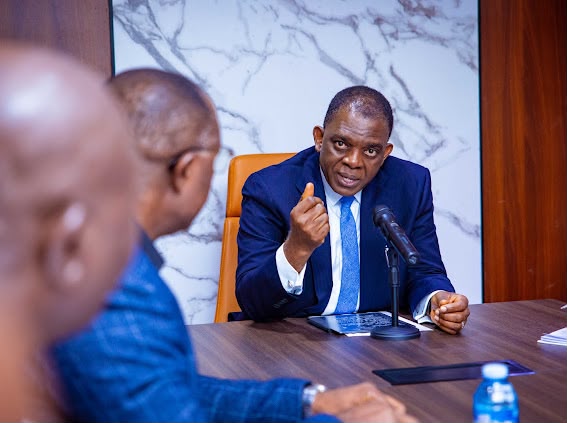
Dr. Bashir Ambi Mohammed, Head, Complaints Unit, Representing the Executive Secretary/CEO, Akutah Pius Ukeyima, Esq., MON, FCILT, Ph.D, welcomed the Association and reaffirmed the Council’s mandate to protect stakeholder interests and resolve grievances within the Marine and Blue Economy sector. He assured exporters of the NSC’s commitment to fair treatment and invited the Association’s leadership to formally present their case. The meeting held at the Complaints Unit Meeting Room, 1st Floor, B-Wing, NSC, Headquarters, GRA, Apapa, Lagos.
Mr. Olumekun Olubunmi President, AWAEMAP: explained that the Association comprises over 200 exporter groups, many of whom have faced critical equipment deficits for over two months. He noted that under previous Standard Operating Procedures (SOPs), exporters could confirm Container availability at the point of booking. Historically, Carriers mitigated local shortages by repositioning empties from neighboring hubs like Cotonou via inbound Vessels. However, he alleged that lines have largely abandoned this practice, prioritizing commercial interests over Nigerian export competitiveness. He stated that Vessels scheduled for Nigerian export Cargo are increasingly being diverted to Cotonou, Abidjan, or Tema, where they load Containers and bypass Nigerian exporters entirely. For instance, at PTML Terminal, large volumes of equipment purportedly reserved for CMA CGM export stuffing were instead evacuated as empty repositioning (re-exports) without serving local needs.
Alhaji Nafiu Trustee, AWAEMAP: In response to inquiries regarding specific Carriers, clarified that while the Association was not targeting individuals, the scarcity primarily involved MSC, CMA CGM, COSCO, ONE, and Maersk Nigeria. He acknowledged that while Maersk attempted to assist by diverting equipment to Lekki Deep Sea Port, the volume remained inadequate. He urged the government to compel Carriers to ensure equipment supply during peak seasons to prevent contract breaches and Cargo diversion to competing nations.
As a matter of urgent Dr. Bashir Ambi moved the meeting to MSC for direct engagements with the export Association
At MSC, after brief introduction, Dr. Ambi formally presented the AWAEMAP Complaints to MSC management. He emphasized that while Shipping Lines continue to confirm bookings-triggering contractual obligations, the failure to provide ready-for-use boxes creates significant reputational risk for Nigeria’s global trade reliability.
Mr. Olumekun Olubunmi, AWAEMAP: He highlighted that seasonal commodities specifically Soybeans, Sesame Seeds, and Shea Butter, are currently stagnant in warehouses due to a lack of 20ft General Purpose (GP) Containers. With the Cashew season commencing next month, he warned of a compounded logistics crisis.
Mr. Jesse Chege General Manager, MSC Nigeria: acknowledged the current trade imbalance, noting that declining import volumes have reduced the pool of available empty returns. While the 60-day backlog had not previously reached senior management, he confirmed a surge in booking requests over the last 72 hours. He outlined the following remediation strategies:
- MSC is exploring all internal avenues to increase the supply of “ready-for-use” equipment.
- Internal solutions have been identified to ease immediate pressure on desk officers.
- Mr. Chege announced he would be traveling to MSC Global Headquarters in Geneva from Monday, 12th, January, 2026 to negotiate a dedicated equipment repositioning strategy specifically for the Nigerian market. The meeting proceeded to Hapag-Lloyd Nigeria
At Hapag-Lloyd, Dr. Bashir Ambi Mohammed , after brief introduction, expressed appreciation for the Carrier’s promptness. He issued a general appeal to all Carriers to support the Federal Government’s export drive by prioritizing the supply of 20ft equipment.
Mr. Olumekun Olubunmi AWAEMAP: Reiterated that the appeal was industry-wide. He stressed the urgency of moving agribulk products (Sesame Seeds, Soybeans, Shea Nuts) before the year-end, noting that the upcoming Cashew season would require even greater volumes of both 20ft and 40ft units.
Alhaji Nafiu, Trustee AWAEMAP: Expressed concern over the lack of a definitive timeline for equipment availability, noting that shipments delayed by 2-3 weeks are incurring costs in warehouses, further eroding profit margins.
Mr. Oladimeji Femi, Equipment Dispatch Officer, Hapag-Lloyd: apologized for the delays, citing factors beyond the Carrier’s immediate control, specifically the sharp decline in inbound laden imports. He revealed that 116X20ft units are currently available at Onne Port. He suggested that exporters consider diverting Cargo to Onne to utilize this inventory, as inter-port trucking costs currently exceed ₦1.8 million per unit.
He added that as part of effort to curbed the trend Hapag-Lloyd has instructed terminals to stop the outward evacuation of 20ft units, channeling them instead to holding bays for export stuffing. He noted a previous instance where 500 empties were repositioned from Johannesburg, South Africa, but 460 went unused, emphasizing the need for accurate demand forecasting. He assured the NSC that management is reviewing these complaints during their weekly global operations meetings.
Summary of Resolution Steps
- Short-term: Carriers to halt the export of empty Containers and prioritize local stuffing.
- Medium-term: Repositioning of empty units from international hubs (Geneva/Johannesburg) to Nigeria.
- Strategic: Exporters are encouraged to improve demand forecasting to avoid past instances where repositioned Containers went unused.
- Council’s intervention to continue with the remaining Shipping Companies.
The Association expressed immense gratitude to the prompt intervention by the NSC.