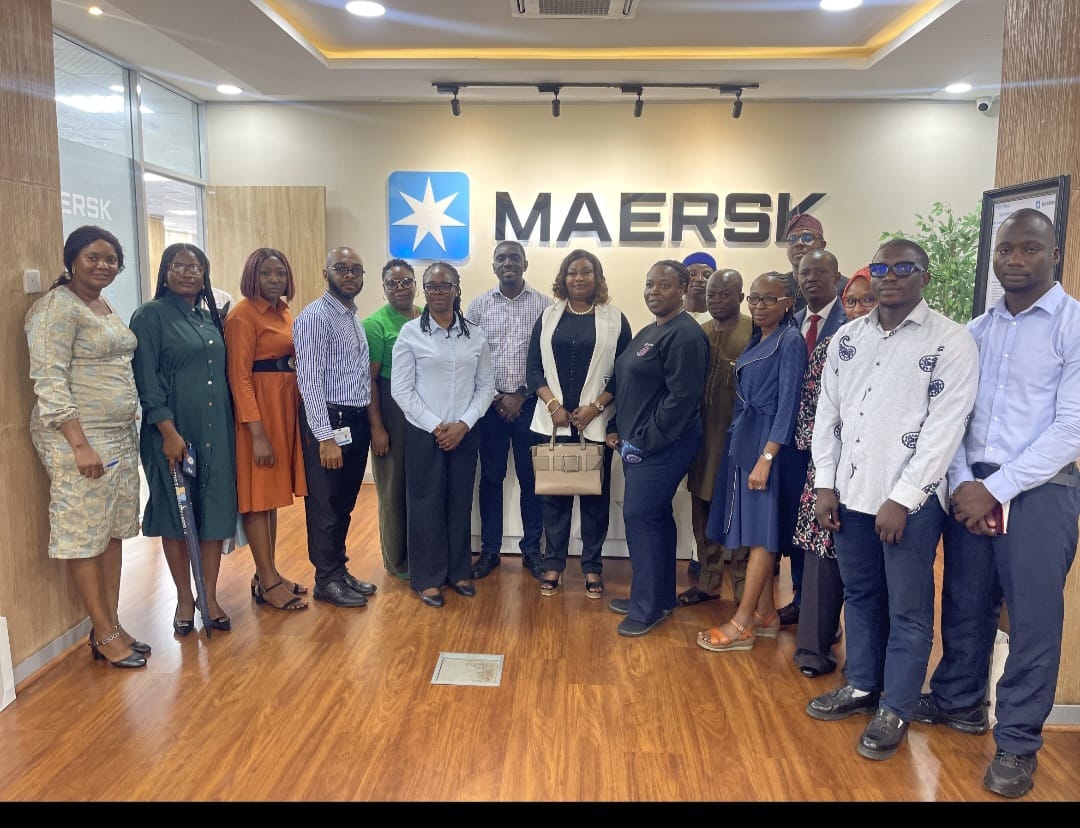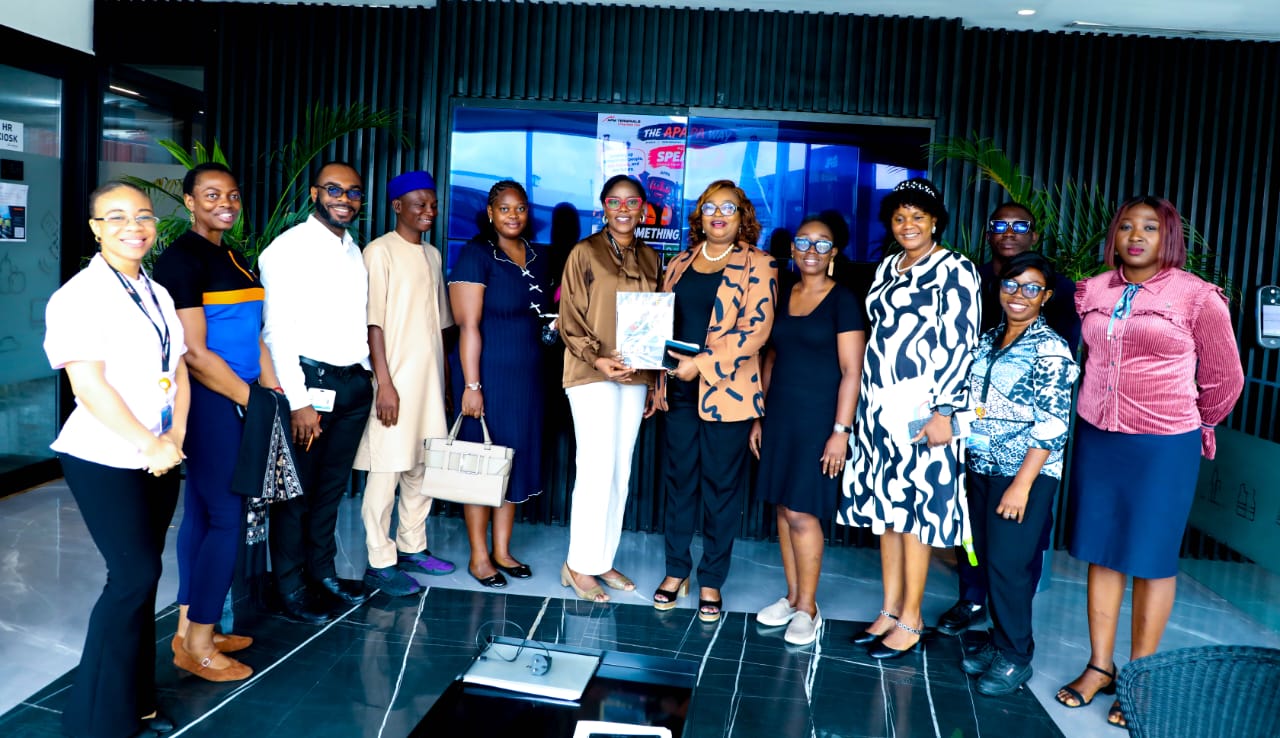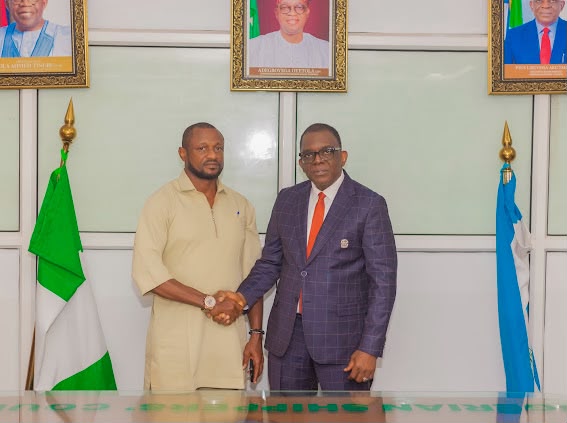






Following introductions by participants, Dr. Ambi Bashir Mohammed, Head, Complaints Unit, speaking on behalf of the Executive Secretary/CEO of the Nigerian Shippers’ Council (NSC), Akutah Pius Ukeyima, Esq., MON, FCILT, Ph.D., welcomed attendees to the mediation meeting. Ambi explained that the Nigerian Shippers’ Council is not a conventional court of law but serves as the officially recognised Maritime and Commercial Shipping Dispute Resolution Desk under the Federal Ministry of Marine and Blue Economy. He also introduced Mrs. Juliana Obiageli Saka, Assistant Director and Head of Complaints (Designate), noting that she would soon assume leadership of the Unit.
Jessica Dan, the case handler, was invited to present a summary of the complaint. She informed the meeting that the Council received a petition from Okoli Ucheoma, representing Adelheid Nigeria Limited, manufacturers of diffusers, against Cargoextra Logistics over an LCL (Less than Container Load) shipment handled by the Logistics Company. According to the complaint, Cargoextra Logistics allegedly engaged in non-transparent billing practices and failed to provide a clear freight rate structure, shipment manifest, or the actual CBM (Cubic Metre) measurement of the cargo. The complainant further alleged that the Company issued no fewer than six different invoices for the same shipment without consistent explanations or supporting documentation.
Additional concerns raised included:
- Lack of transparency regarding freight rates and shipment manifest;
- Alleged inflated and inconsistent CBM calculations;
- Failure to properly consolidate the cargo;
- Contradictory and negotiated billing practices;
- Withholding of cargo;
- Business disruption resulting from shipment delays; and
- Alleged improper application of VAT in dollars denominations
The complainant stated that the delay significantly disrupted business operations, as customers awaiting delivery of products experienced extended waiting periods, leading to missed timelines and financial losses. Consequently, Adelheid Nigeria Limited sought the intervention of the Nigerian Shippers’ Council.
Dr. Ambi Mohammed asked the claimant whether the summary accurately reflected her grievances as submitted to the Council. She responded in the affirmative and further disclosed that, prior to the meeting, Mr. Olawale Lawal, Director of Cargoextra Logistics, had contacted her by telephone and offered to revise the invoice downward to ₦1.9 million, while she requested a further reduction to ₦1.7 million and the removal of VAT charges denominated in dollars. According to her, Mr. Lawal promised to issue a revised invoice within thirty minutes, but no revised invoice was received after twelve hours.
Joining virtually, the claimant further explained that an initial invoice of ₦8.3 million had been presented to her. She stated that she was later informed that delivery would terminate in Abuja, despite the dashboard instruction indicating a door-to-door delivery arrangement.
Expressing dissatisfaction with the handling of the shipment, she insisted that the Nigerian Shippers’ Council should independently verify the exact CBM of the cargo rather than rely on what she described as a “negotiated CBM.” She maintained that she was willing to pay based strictly on the actual cargo volume, whether higher or lower.
Mrs. Juliana Obiageli Saka, who stepped in after Dr. Ambi Mohammed was called away for another engagement, asked the claimant to confirm the latest revised invoice issued by Cargoextra Logistics. The claimant responded that the revised invoice stood at ₦1,948,602.
Responding on behalf of Cargoextra Logistics, Mr. Wale explained that he only became aware of the dispute after it had been escalated to management, noting that he operates outside Nigeria.
He stated that customers must understand that shipping companies operate under varying policies, especially regarding CBM-based cargo calculations in international freight forwarding. Drawing from his experience in the United States, he explained that freight charges are commonly determined by cargo volume, with CBM and volume effectively representing the same measurement standard.
According to him, Cargoextra Logistics initially requested the dimensions of the goods and billed the shipment at 2.3 CBM. Upon arrival in Lagos, the warehouse team in China uploaded the dimensions online, which formed the basis for the initial invoicing.
However, after the claimant disputed the calculation, the company conducted another measurement exercise and arrived at 1.94 CBM. He explained that the claimant insisted the goods should have been consolidated to reduce cargo volume, but clarified that Cargoextra Logistics does not offer cargo consolidation services in such circumstances because factory-packaged goods are typically shipped in their original state to avoid loss of accessories or product components.
He added that shipments destined for Abuja attract different logistics charges from those delivered within Lagos due to operational differences. According to him, the company’s standard freight rate from China to Lagos is $420 per CBM.
In her intervention, Mrs. Juliana Obiageli Saka observed that the shipment had already been delayed for approximately two weeks and warned that any further request for independent CBM verification could lead to additional delays and extra costs.
She explained that if the claimant had independently verified the cargo dimensions before shipment, the dispute might have been avoided. She further noted that engaging a third party or requesting the Council to physically re-measure the cargo would involve further operational costs, including possible travel expenses to Lagos.
Mrs. Saka pointed out that the dispute had evolved from an initial 2.3 CBM calculation to 1.9 CBM, then 1.7 CBM, before eventually arriving at a negotiated payable amount of ₦999,600.
In the interest of the claimant’s business continuity and customer satisfaction, she advised both parties to accept amicable resolutions. She encouraged importers to exercise due diligence when engaging in international shipping and logistics transactions.
Meeting Resolutions
Following extensive deliberations and a critical review of all documents presented, the meeting reached the following resolutions that:
1. The Nigerian Shippers’ Council affirmed that a total shipment volume of 1.94 CBM belonging to Adelheid Nigeria Limited represented by Ucheoma Okoli, the Complainant, was shipped by Cargoextra Logistics as the deconsolidating Company.
2. The Council commended Cargoextra Logistics for reducing the cargo charges to the equivalent of 1.5 CBM.
3. The Complainant, Adelheid Nigeria Limited represented by Ucheoma Okoli, was directed to make payment immediately or risk forfeiting the revised concessionary rate. Evidence of payment be shared with the Council accordingly.
4. The Nigerian Shippers’ Council advised Cargoextra Logistics and other operators within the industry to improve Customer education regarding CBM calculations and freight charges.
5. Cargoextra Logistics was further urged to strengthen its customer relations systems and maintain dedicated communication channels for clients and government agencies.
6. The Council directed Cargoextra Logistics to update its registration status with the Nigerian Shippers’ Council.
7. Adelheid Nigeria Limited was advised to facilitate prompt offloading of the cargo upon delivery and avoid unnecessary delay of the delivery vehicle.
8. Both parties were encouraged to maintain and strengthen their existing business relationship moving forward.