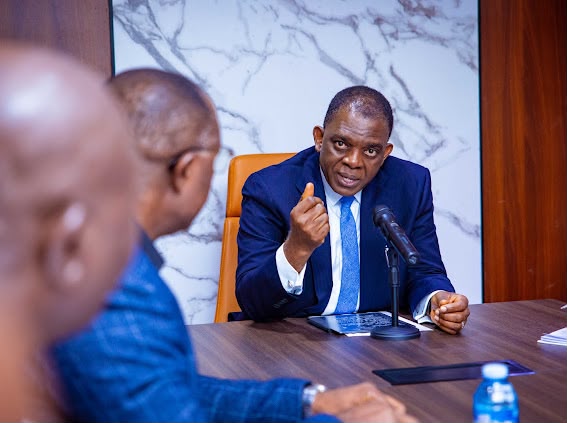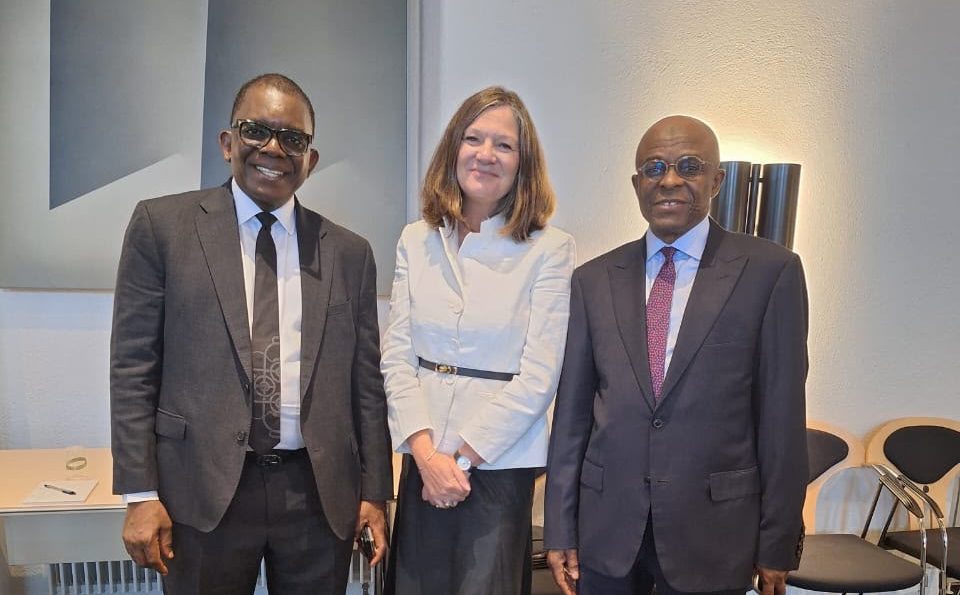


The Director-General/Chief Executive Officer of the Nigerian Ports Economic Regulatory Agency (NPERA), Dr. Pius Akutah, MON, has said the NPERA Act 2026 has given the Agency the powers required to sanitize Nigeria’s port sector, promote fair competition and protect investments.
Akutah stated this when the Executives of the Maritime Correspondents Organisation of Nigeria (MARCON), led by its President, Mr. Ismaïl Aniemu, paid a courtesy visit to the Agency’s headquarters in Lagos.
He commended MARCON and the wider maritime media for their support over the years, noting that the enactment of the NPERA Act was a collective achievement that required the contributions of stakeholders across the sector.
“The accomplishment which you have attributed to us is just one of the things that we can all celebrate for the sector. Every hand was on deck to get us to where we are, and we need every hand on deck to move forward from here,” he said.
Akutah said the new law was more than a change of name, stressing that it had significantly strengthened the Agency’s regulatory responsibilities and powers.
He said the focus now was on translating the legislation into tangible improvements in the port sector, particularly in the areas of efficiency, competition, investment protection and trade facilitation.
“If we look at the law, and I ask everybody to go and read the law very well, it has given us enormous powers to sanitise the port sector,” Akutah said.
According to him, NPERA would use its regulatory powers to ensure a level playing field among service providers and users, regulate tariffs, set standards and enforce compliance.
He added that the law would also establish a stronger deterrent against activities that undermine port operations and trade facilitation, with regulatory infractions attracting fines, while some offences could lead to criminal prosecution and imprisonment.
“The law is no respecter of persons. It will be applied in a very firm but effective manner to achieve the purpose for which it was made,” he said.
Akutah said the reforms were also aligned with the Federal Government’s ambition to diversify the economy and make the maritime sector a stronger contributor to national economic growth.
He noted that achieving the government’s target of building a trillion-dollar economy by 2030 would require an efficient and properly regulated maritime sector capable of attracting and protecting investment.
On dispute resolution, the NPERA boss said the Agency would strengthen its alternative dispute resolution mechanism to reduce the cost and time associated with maritime disputes.
“It is better for us to find alternative ways of resolving these disputes so that it does not, in the long run, hamper our business and trade facilitation efforts,” he said.
Akutah also disclosed that discussions had commenced with the Nigerian Ports Authority (NPA) on the transfer of inland dry port development functions, explaining that NPERA, as an economic regulator, should not simultaneously regulate the sector and promote infrastructure development within it.
“As a regulator, we cannot be regulating the sector and also promoting the development of infrastructure within the sector,” he said.
He further said the Minister of Marine and Blue Economy had ensured clarity of mandates among relevant government agencies to prevent overlapping responsibilities and inter-agency conflicts under the new regulatory framework.
Speaking earlier, MARCON President, Mr. Ismaïl Aniemu, congratulated Akutah on the enactment of the NPERA Act, describing it as the culmination of years of advocacy and engagement by the Nigerian Shippers’ Council and other maritime stakeholders.
Aniemu said the new economic regulatory framework would create conditions for greater efficiency, investment and competitiveness in Nigerian ports, but stressed that the real test would be its implementation.
He pledged MARCON’s continued support for NPERA, particularly in its efforts to position Nigerian ports as a leading maritime hub in West and Central Africa.
Aniemu also commended Akutah’s contributions to maritime dispute resolution and fairness in the industry.
As NPERA moves from legislation to implementation, Aniemu said MARCON would maintain its partnership with the Agency while continuing to play its watchdog role and using the media to spotlight reforms capable of making Nigeria’s ports more efficient, competitive and better positioned to serve as a regional maritime hub.