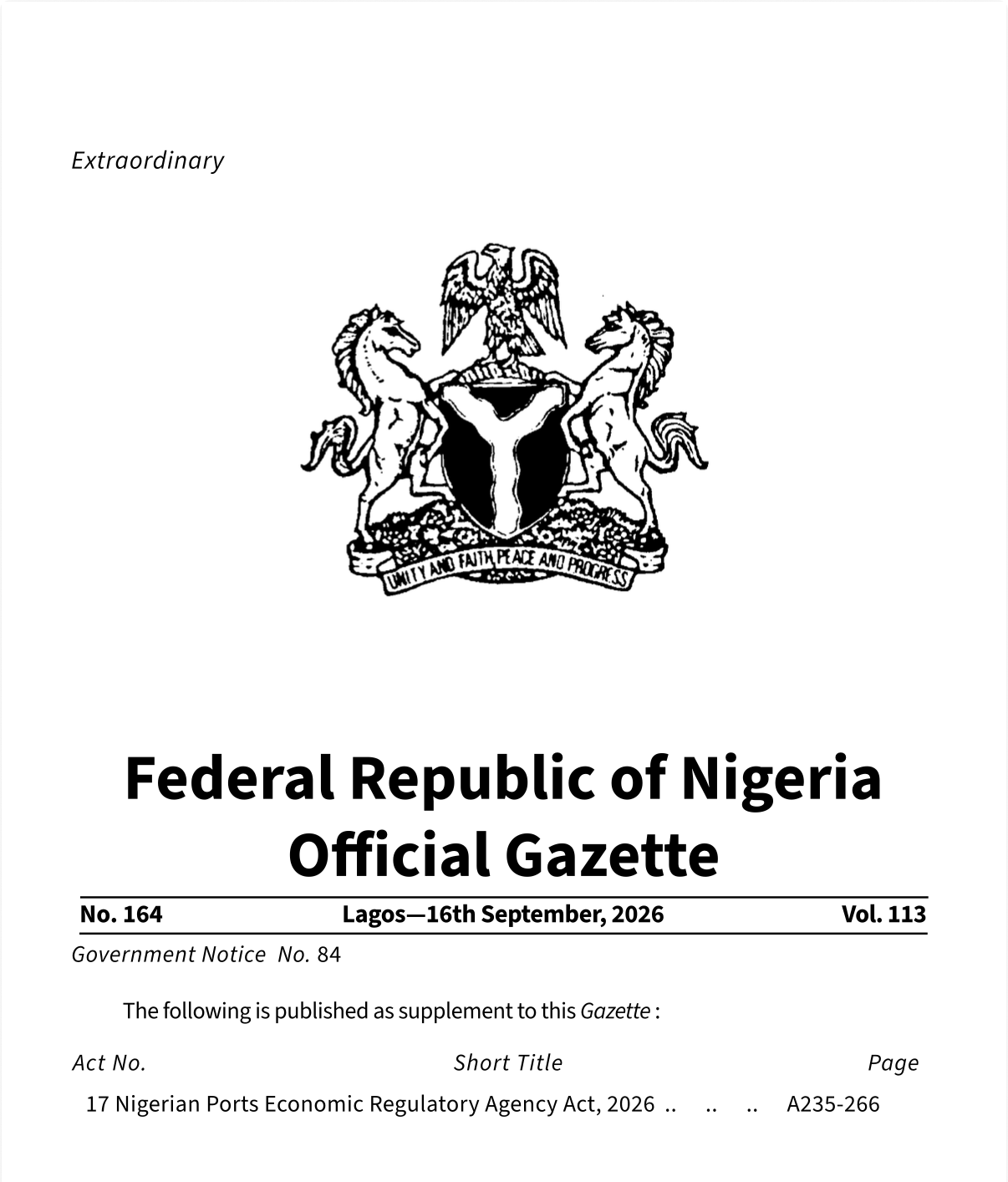





Nigeria’s port sector has entered a new regulatory era, with the Nigerian Shippers’ Council formally transitioning into the Nigeria Ports Economic Regulatory Agency (NPERA).
The transition follows President Bola Ahmed Tinubu’s (GCFR) assent to Nigerian Ports Economic Regulatory Agency Act, 2026, establishing the Agency as the statutory authority responsible for the economic regulation of the ports in the country.
Speaking at a press briefing in Lagos, Chairman of the NPERA Governing Board, Dr. Ibrahim Shema, CON, described the development as a major institutional reform that is aimed at creating a more transparent, predictable, and competitive port environment.
He added that NPERA will be responsible for the economic regulation of port services and related activities, including tariffs and charges, licensing, service standards, fair competition, commercial dispute resolution, trade facilitation and protection of port users.
Dr. Shema said the new framework is expected to provide greater regulatory certainty for Shipping Lines and Terminal Operators, while offering Importers, Exporters, Freight Forwarders and Clearing Agents more predictable procedures, fairer charges and improved mechanisms for resolving disputes.
He also clarified that the establishment of NPERA does not create a competing authority with the Nigerian Ports Authority. While the Nigerian Ports Authority will retain responsibility for port infrastructure and its landlord functions, NPERA will provide independent economic oversight within its statutory mandate.
The Board Chairman said the Agency’s regulatory approach will be anchored on five principles: transparency, fairness, predictability, efficiency, and accountability.
He added that NPERA would deploy technology and data to strengthen licensing, tariff administration, monitoring, compliance, reporting, and stakeholder engagement.